Most people walk past that cabinet every day without a second thought. I think it deserves one, because the same box that heats your home moves every breath of air through it. A pleated furnace filter traps airborne dust and particles as air circulates through the system. Once you know what it looks like inside and out, you can read the signs it gives off and protect both your system and the people you share your home with.
TL;DR Quick Answers
What is an electric furnace?
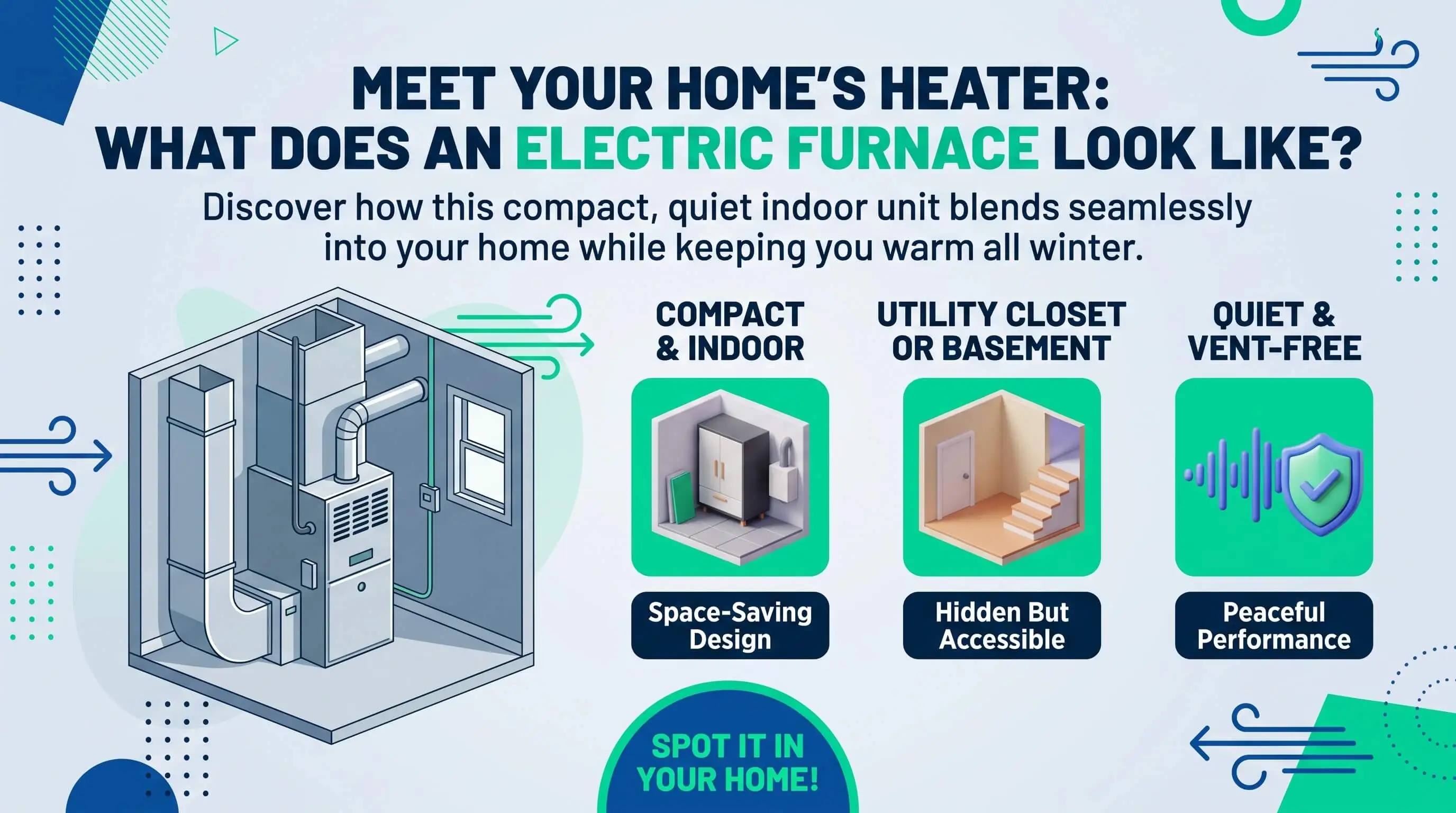
An electric furnace is a forced-air heater that warms indoor air over electric resistance elements and pushes it through your ducts. Look for a tall sheet-metal cabinet in a closet, attic, or crawl space with no flue pipe or gas line. Behind its panels sit heating elements, sequencers, limit switches, and a blower.
Looks like: A tall metal cabinet with removable panels, a supply duct on top, and a return below.
Usually found: Hall closets, utility rooms, attics, crawl spaces, and manufactured home closets.
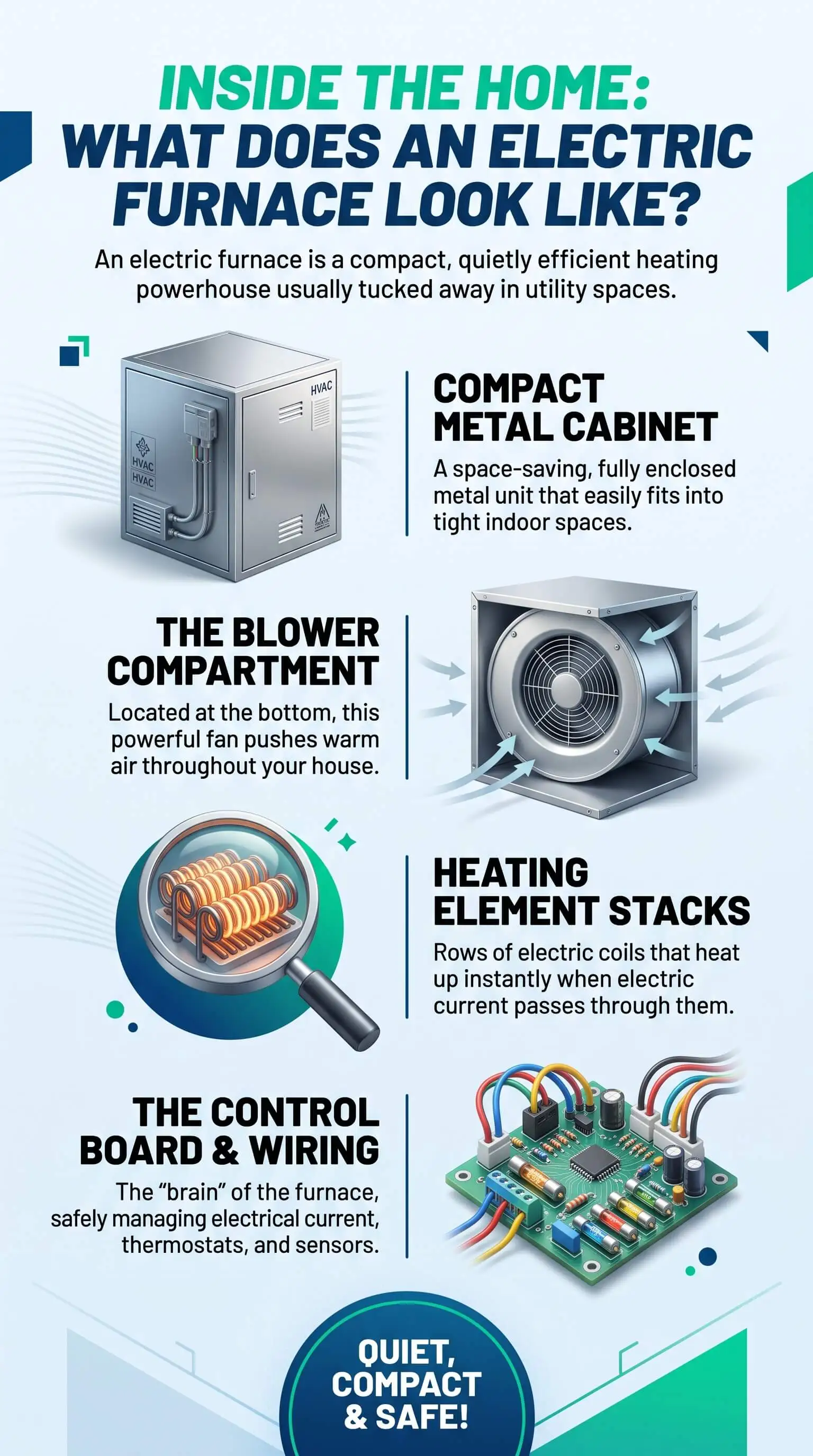
Inside: Three to seven coiled elements, sequencers, limit switches, a blower, and often a filter slot.
How to tell it apart: No venting, no gas valve, large double-pole breakers, and a data plate listing kW.
Top Takeaways
An electric furnace is a tall sheet-metal cabinet that warms air over electric elements and sends it through your ducts.
You can spot one by what's missing, since it has no flue pipe, gas line, or flame window.
Behind the panels you'll find three to seven heating elements, sequencers, limit switches, a blower, and often a filter slot.
Airflow direction decides placement: closets for upflow, attics and crawl spaces for horizontal, manufactured homes for downflow.
A clogged filter often trips the limit switch and shuts the elements down, so check it before you call for service. Even top air filters need regular inspection and replacement to maintain proper airflow.
Look all you like, but keep energized panels closed because the cabinet carries 240-volt power.
What an Electric Furnace Looks Like From the Outside
Picture a narrow refrigerator made of sheet metal. That's roughly the size and shape of most upright electric furnaces, with one or two service panels on the front held by screws or a slide-up latch.
Here's what to look for once you find it:
A large duct on top or at one end. That's the supply plenum, and it carries warm air to your rooms.
A return connection at the bottom or side. Cooler room air comes back through here, often past a filter grille.
A metal data plate. It lists kilowatts and voltage instead of the BTU input or AFUE rating you'd see on a gas unit.
An electrical disconnect on a nearby wall. These units pull heavy 240-volt power, so they get their own shutoff.
Nothing that vents or burns. You won't see a flue pipe, gas line, or flame window, and that missing hardware is the fastest giveaway.
What You See Inside the Cabinet
The inside surprises most people because there's so little to it.
Heating elements. A bank of three to seven coiled resistance elements, each usually rated around 5 kW.
Sequencers or a control board. They switch elements on in stages, so your home's electrical load climbs gradually instead of all at once.
Limit switches and fuses. These cut power to the elements when the cabinet runs too hot, which usually happens when a blower quits or a dirty filter chokes the airflow.
The blower. A squirrel-cage fan pulls air across the hot elements and pushes it into your ducts.
A filter slot or rack. The filter guards the blower and elements from dust. If yours lives here, check which way the filter arrow should point before you slide in a new one.
For the full heating sequence, this guide to what an electric furnace is and how it works walks through every step. One rule I'd never bend: look, but don't open an energized cabinet. Flip the disconnect off first, or leave the inspection to a licensed pro.
Where Electric Furnaces Are Installed in a Home
The direction a unit moves air decides where it ends up.
Hall closets and utility rooms (upflow). Air comes in low and leaves through the top into overhead ducts.
Attics and crawl spaces (horizontal). The cabinet lies on its side and pushes air sideways.
Manufactured homes and upper floors (downflow). Air enters up top and exits through the floor.
If you can't find yours, follow the biggest return grille in the hallway. The furnace is rarely far behind it.
How to Tell an Electric Furnace From a Gas Furnace or Air Handler
From the outside, these units can look nearly identical. A few clues settle it fast:
Venting: A gas furnace needs a flue or PVC vent pipes. An electric furnace has neither.
Fuel line: Gas units have a gas pipe and shutoff valve. Electric units don't.
Breaker panel: An electric furnace runs on large double-pole breakers, often labeled "furnace" or "heat."
Outdoor unit: A heat pump outside usually means your indoor cabinet is an air handler with backup heat strips. It looks almost the same as an electric furnace and heats the same way whenever backup heat kicks on.
What Its Appearance Says About Its Condition
Your furnace usually shows trouble on the outside before you feel it in your rooms. Watch for rust stains, scorch marks near the element panel, a breaker that keeps tripping, or a burning smell that hangs around past the first few minutes of the season. Any of those is worth a service call.
A faint dusty smell on the first cold morning is normal, so don't worry over that one. When several warning signs show up at once, compare them against these signs your furnace is going out.
"In my experience, when a homeowner calls about an electric furnace blowing lukewarm air, the elements are rarely the culprit. Nine times out of ten, a clogged filter has starved the cabinet of airflow, the high limit switch trips, and the sequencer keeps shutting elements off before the house ever warms up."
7 Essential Resources
What Is an Electric Furnace and How It Works. Walks through how the thermostat, elements, and blower work together, with filter guidance at the end.
ENERGY STAR: Air-Source Heat Pumps. Shows how a heat pump hooks into your existing ductwork and why it can lower electric heating bills.
EPA: Guide to Air Cleaners in the Home. Federal guidance on furnace filter ratings, sizing, and how often to swap them out.
CPSC: Carbon Monoxide Information Center. Where to put CO alarms, which still matter in any home with a fuel-burning appliance.
NFPA: Safety With Heating Equipment. Seasonal precautions that apply to every kind of home heating equipment.
ESFI: Fire Prevention. Electrical fire safety materials worth a read in any home running high-amperage appliances.
InterNACHI: How to Inspect HVAC Systems. The inspection framework certified home inspectors follow, electric furnaces included.
3 Statistics
42% of U.S. households relied on electricity as their main space heating fuel in 2024, according to the U.S. Energy Information Administration. That puts an electric furnace or air handler in millions of closets and attics across the country.
Heat pumps can cut electricity use by about 50% compared with electric resistance heating, according to the U.S. Department of Energy. The same agency notes that electric furnaces typically run three to seven elements rated around 5 kW each, so knowing what's in your cabinet helps when you weigh an upgrade.
Heating was the second leading cause of home fires in 2021, with an estimated 32,200 home heating fires reported, according to the U.S. Fire Administration. Clearing the space around your furnace and booking an annual inspection are two easy ways to protect your household.
With 42% of U.S. households relying on electricity for heating, heat pumps offering up to 50% lower electricity use than electric resistance heating, and thousands of heating-related fires reported annually, understanding your heating system, scheduling regular inspections, and choosing properly sized MERV 11 pleated furnace air filters are important steps toward maintaining efficient airflow and household safety.
Final Thoughts and Opinion
I'd argue an electric furnace is one of the easiest heating systems to live with, which is exactly why people forget it's there. My advice is simple. Open that closet door once, find the data plate, and note where the filter goes. It takes about five minutes, and afterward the box in the hallway stops being a mystery and becomes something you can look after.
The cabinet rarely fails without warning. Dust on the elements, a tripped limit switch, or a filter gone gray all mean it needs attention. Catch those early and you protect the system, your energy bill, and the air your family breathes. If you're trying to judge how many years your unit has left, this breakdown of the average life of a furnace is a smart next read.
Frequently Asked Questions
What is an electric furnace?
An electric furnace is a central heating appliance that blows your home's air across electric resistance elements and sends the warmed air through your ductwork. Nothing burns inside it, so it needs no flue or gas line. Your thermostat and the furnace's control board switch the elements on in stages as the house calls for heat.
Where is the electric furnace in my house?
Check a hall closet, utility room, attic, crawl space, or garage first. Manufactured homes often keep theirs in a closet near the middle of the house. If you still can't find it, follow the largest return air grille, and you'll usually find the cabinet right behind it.
How big is an electric furnace?
Most upright residential units are about the size of a narrow refrigerator. Horizontal attic models run a similar length but lie on their side. The data plate lists heating capacity in kilowatts, and that number tells you far more about the unit than its footprint does.
Is an electric furnace the same as an air handler?
Not quite. An air handler holds a blower and coil and pairs with an outdoor heat pump or air conditioner. Many air handlers also carry backup heat strips that work just like electric furnace elements. If you've got a heat pump outside, your indoor cabinet is most likely an air handler.
Does an electric furnace need a carbon monoxide detector?
An electric furnace can't produce carbon monoxide because nothing burns inside it. Keep CO alarms on every level of your home anyway if you have a gas water heater, range, fireplace, or any other fuel-burning appliance, or an attached garage.
Get to Know the Electric Furnace in Your Home
You now know what an electric furnace looks like inside a home, so go find yours, read its data plate, and check the furnace filter. That small habit keeps your system running safely and keeps clean air moving through every room your family uses.